 Deutsch
 English



Fill Level Detection of Turbid Liquids with Laser Distance Sensors
Precise Fill Level Measurement – Even in Turbid and Particle-Laden Media
The non-contact detection of fill levels in turbid liquids presents special challenges in industrial measurement technology. Conventional optical sensors quickly reach their limits with milky, contaminated, or particle-laden media. Laser distance sensors, however, enable reliable, precise, and low-maintenance fill level measurement – regardless of the turbidity or color of the liquid.
![[Translate to Englisch:] Füllstanderkennung von trüber Flüssigkeit](/fileadmin/_processed_/e/b/csm_F%C3%BCllstandserkennung-von-tr%C3%BCber-Fl%C3%BCssigkeit_cfb21b78af.png "[Translate to Englisch:] Füllstanderkennung von trüber Flüssigkeit")
Operating Principle: How Laser Distance Measurement Works
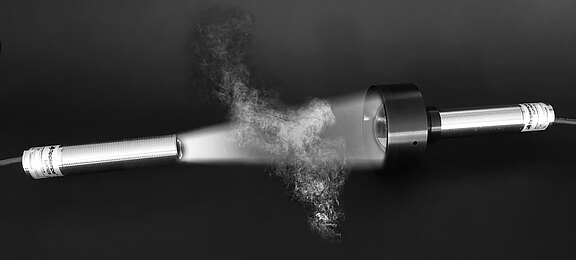
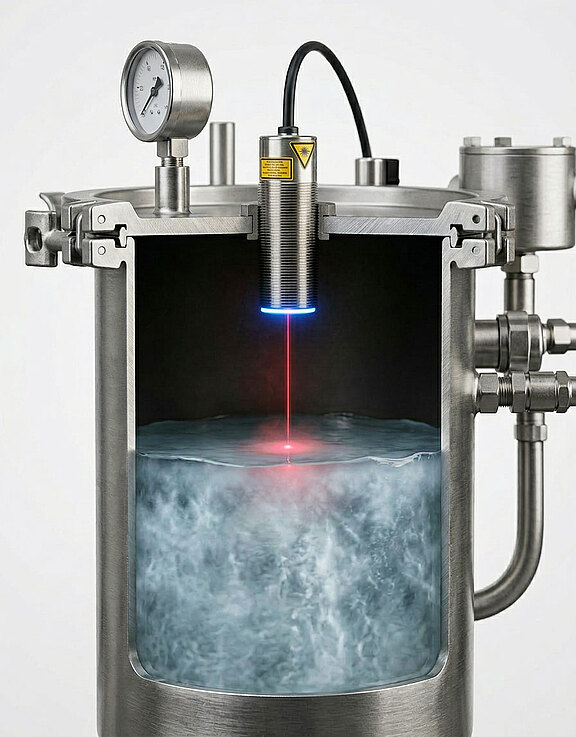
Fill level detection with laser distance sensors is based on the time-of-flight (ToF) principle. A focused laser beam is directed downward onto the surface of the liquid and reflected back. The sensor precisely measures the time the laser pulse takes to travel from the laser source to the liquid surface and back to the receiver.
This transit time is then converted into an exact distance – and thus directly into the current fill level of the container. Since the laser beam does not touch the liquid and is only reflected at the surface, the turbidity of the medium plays no decisive role in measurement accuracy.
Measurement principle at a glance:
- Laser beam hits the liquid surface vertically
- Reflection of the beam from the surface back to the sensor
- Transit time measurement with picosecond precision
- Conversion of transit time into a precise distance (= fill level)
- Output as analog signal (4–20 mA) or digital interface
Advantages Over Conventional Measurement Methods
| Feature | Laser Distance Sensor | Ultrasonic | Float / Mechanical |
|---|---|---|---|
| Non-contact measurement | ✅ | ✅ | ❌ |
| Suitable for turbid media | ✅ | ⚠️ | ✅ |
| High measurement accuracy | ✅ | ⚠️ | ❌ |
| Low maintenance | ✅ | ✅ | ❌ |
| Compact design | ✅ | ⚠️ | ❌ |
| Stainless steel housing (hygienic) | ✅ | ⚠️ | ⚠️ |
Typical Industrial Applications
Laser distance sensors for fill level detection are used wherever turbid, viscous, or particle-laden media need to be measured precisely:
- Food & Beverage Industry: Fill level measurement of fruit juices, milk, yogurt, soups, or purees
- Chemical Industry: Monitoring of reaction vessels with aggressive or turbid chemicals
- Pharmaceutical Industry: Hygienic fill level measurement in closed sterile containers
- Wastewater Technology: Measurement in sewage treatment plants, digestion tanks, and sedimentation basins
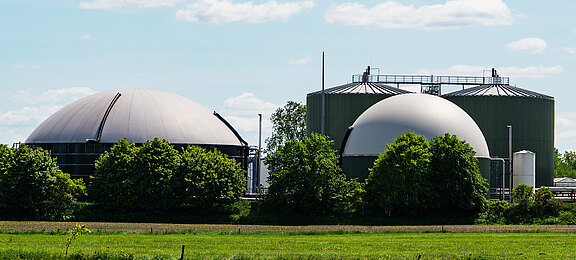
- Biogas Plants: Fill level monitoring of fermentation substrates and slurry tanks
- Laboratory Technology: Precision measurement in reaction vessels and fermenters
The LDH Laser Distance Sensor – Specifically Designed for Demanding Media
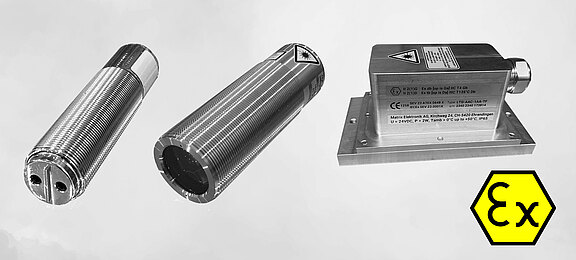
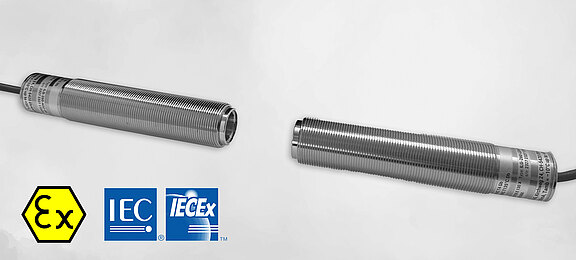
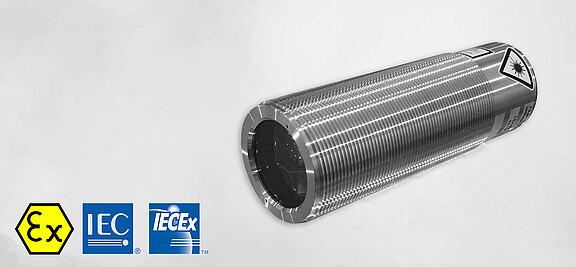
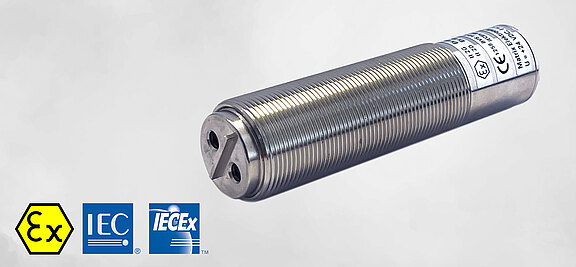
The LDH laser distance sensor was specifically developed for industrial use under difficult measurement conditions. With its robust full stainless steel housing (V4A), IP67 protection rating, and focused laser beam, it is ideally suited for fill level detection in closed or pressurized containers.
Technical Highlights:
- Measuring range: up to several meters
- Measurement accuracy: ± 1 mm (depending on model)
- Protection class: IP67 / IP69K
- Housing: V4A stainless steel – hygienic and corrosion-resistant
- Laser class: Class 2 (eye-safe)
- Interfaces: 4–20 mA, IO-Link, digital switching output
- Installation: from above through tank cover, flange, or threaded fitting
Installation and Integration
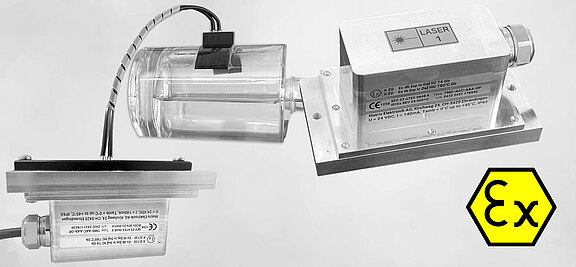
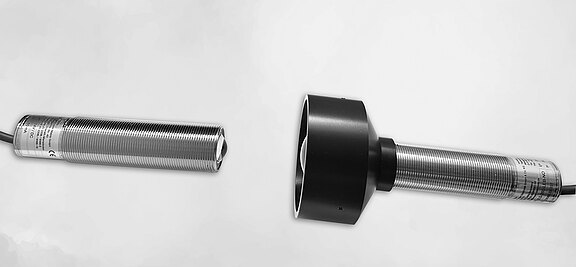
The laser distance sensor is easily and space-efficiently mounted from above through the container lid or flange. The sensor is aligned vertically downward toward the liquid surface. Thanks to its compact cylindrical design (e.g., M30 thread), it can be seamlessly integrated into existing systems – without modifying the container.
Signal output via 4–20 mA or IO-Link enables direct connection to PLCs, process control systems, or IIoT platforms.
Frequently Asked Questions (FAQ)
Does the laser sensor work with heavily foaming liquids? Strong foam can affect the measurement. In such cases, we recommend adjusting the measurement parameters or using a protective tube.
How accurate is fill level measurement with laser? Depending on the model and measurement conditions, accuracies of ± 1 mm to ± 5 mm are achieved – significantly more precise than ultrasonic sensors under comparable conditions.
Is the sensor suitable for pressure vessels? Yes, with appropriate pressure fittings or sight glasses, use in pressure vessels is also possible.
Which liquids can be measured? The LDH sensor is suitable for virtually all turbid and clear liquids – from water and oils to pasty media.
Conclusion: Reliable Fill Level Measurement with Laser Technology
Laser distance sensors offer decisive advantages for fill level detection in turbid liquids: they operate non-contact, maintenance-free, and with high precision – regardless of the color, turbidity, or viscosity of the medium. Thanks to the robust stainless steel design and easy integration, they are the ideal solution for demanding industrial measurement tasks.
Interested in our LDH laser distance sensor? Contact us for individual consultation or request a no-obligation quote directly.